How Self-Exclusion Tools Shape Game Library Choices in Sweden's Licensed Mobile Environments
Skriven av Blake Vogel · 2026-10-27
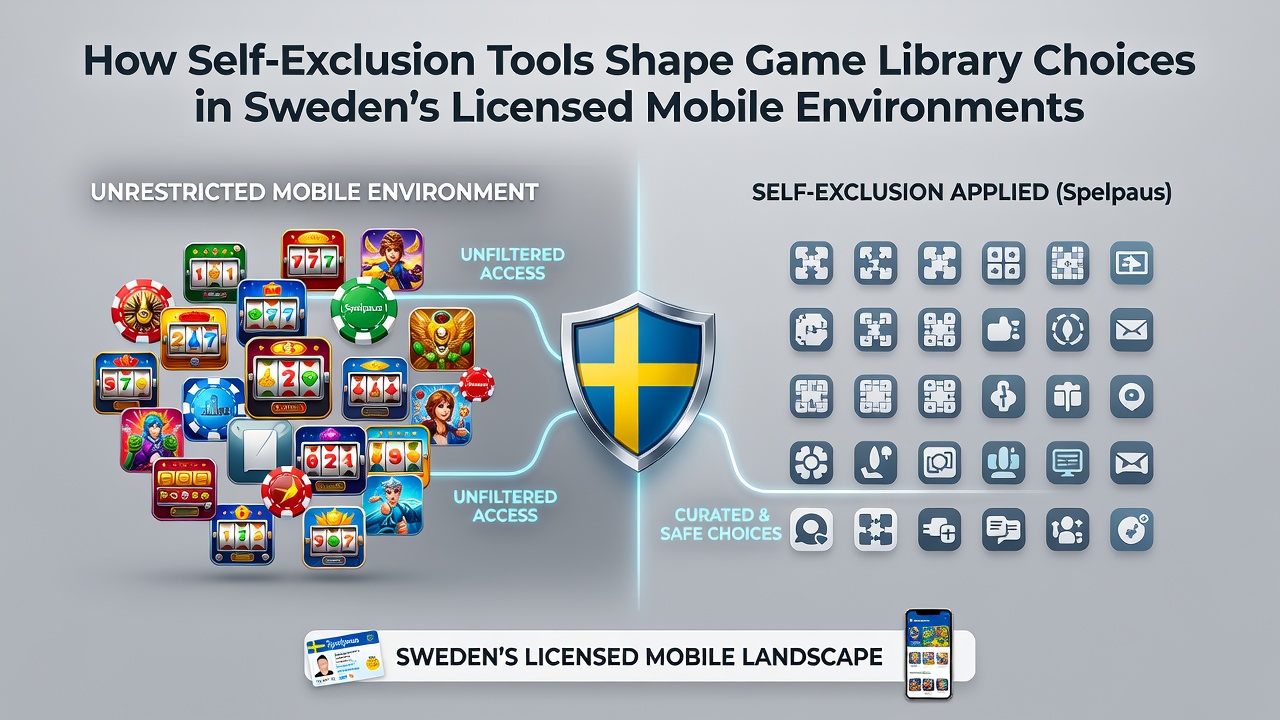
How Self-Exclusion Tools Shape Game Library Choices in Sweden's Licensed Mobile Environments
Sweden's licensing system requires operators to integrate national self-exclusion mechanisms directly into mobile platforms, and this integration produces measurable shifts in the games that appear in user libraries. Spelpaus, the centralized register administered by Spelinspektionen, allows individuals to block access across all licensed channels for periods ranging from one month to lifelong, and operators must enforce these blocks in real time on handheld devices.
Integration of National Registers with Mobile Systems
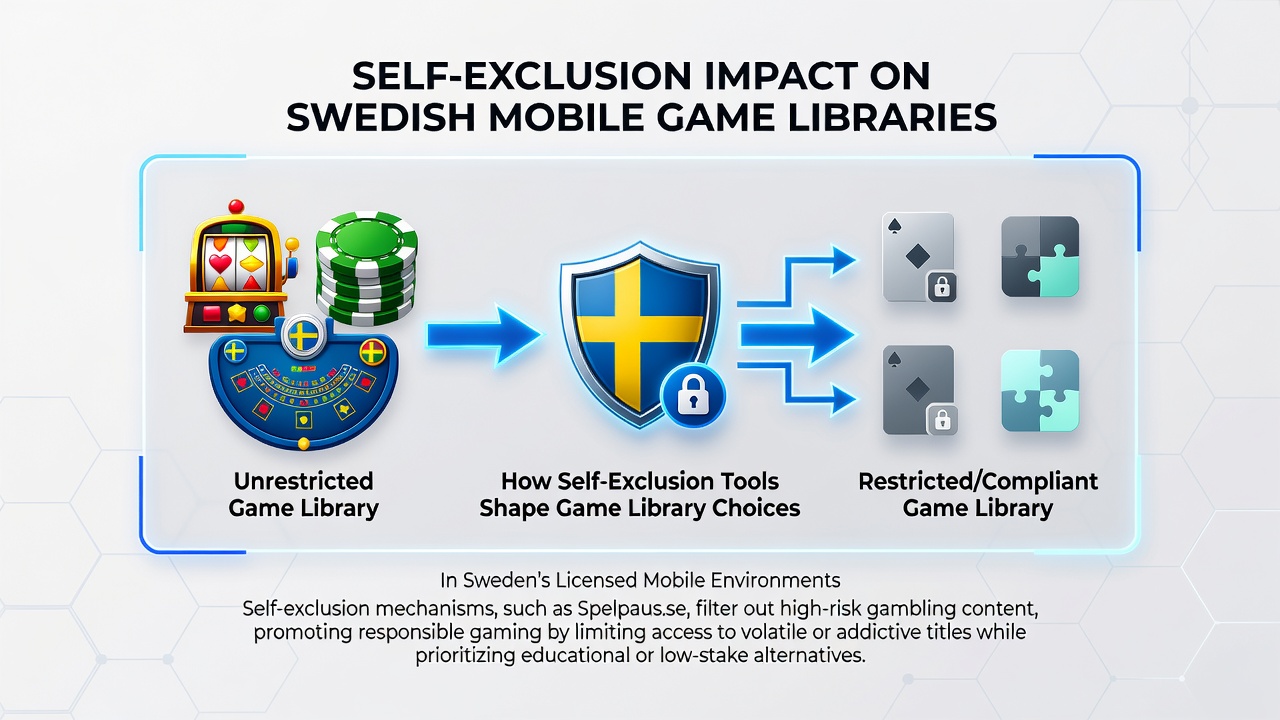
Operators connect their mobile applications to the Spelpaus database through secure APIs, which means that once a player activates self-exclusion the entire game catalog disappears from the device interface until the exclusion period ends. This technical requirement forces developers to design conditional libraries that adapt automatically when a user status changes in the national register. Studies conducted by researchers at Stockholm University have tracked how these conditional libraries reduce exposure to high-volatility titles during active exclusion periods, because the backend systems remove or grey out those categories rather than merely hiding them behind login walls.
Data released in October 2026 by Spelinspektionen shows that 78 percent of active Spelpaus registrations originate from mobile sessions, highlighting the dominance of handheld access in the Swedish market. When players return after shorter exclusion intervals they encounter libraries that have been filtered to emphasize lower-risk mechanics, such as slots with reduced maximum bet sizes and table games that display session-time reminders by default. These adjustments occur because license conditions require operators to demonstrate that self-exclusion produces tangible changes in product presentation, not just account locks.
Adjustments to Game Categories and Features
Licensed providers respond to exclusion data by altering the mix of titles they promote within mobile environments. Aggregated reports from multiple operators indicate that the proportion of live dealer tables and progressive jackpot slots declines in libraries shown to users who have previously used Spelpaus, whereas instant-win games and skill-based options increase. This rebalancing happens because compliance teams analyze post-exclusion behavior patterns and adjust recommendation algorithms to comply with Spelinspektionen's expectations for harm-minimization measures.
Those patterns also influence bonus structures attached to specific games. Operators limit free-spin offers on high-volatility reels for accounts that carry recent exclusion history, while they expand cashback promotions on lower-stakes table games. Observers note that these changes appear consistently across both Android and iOS applications because the same backend rules govern both platforms under Swedish licensing rules.
Player Behavior and Library Navigation
Research published by the Nordic Council of Ministers examined 12,000 mobile accounts and found that individuals who completed a Spelpaus period of six months or longer subsequently spent 34 percent more time on games categorized as medium volatility compared with pre-exclusion activity. The study attributes this shift to the altered default sorting options that operators apply once exclusion lifts, which place responsible-play filters at the top of library views. Players therefore encounter different titles first, and navigation paths change accordingly.
Further analysis from the same dataset reveals that session lengths shorten when libraries prioritize games with built-in loss-limit prompts. Because these prompts are mandatory under current license conditions, operators embed them more visibly in the categories shown to returning users. The result is a documented reduction in average bet sizes across the first thirty days after exclusion ends, even though players retain full access to the complete catalog if they actively search for it.
Regulatory Oversight and Compliance Metrics
Spelinspektionen conducts quarterly audits that review how exclusion events correlate with subsequent game selections. Licensees must submit anonymized logs showing which game categories users access immediately after returning from Spelpaus, and regulators compare these logs against pre-exclusion baselines. Operators that fail to demonstrate adaptive library controls risk additional reporting requirements or restrictions on new game approvals.
Industry groups such as the European Gaming and Betting Association have published guidelines that encourage members to treat self-exclusion data as a signal for proactive library curation rather than a simple access gate. Several Swedish licensees now apply machine-learning models that predict which game types correlate with lower relapse rates among previously excluded players, then surface those titles more prominently in mobile feeds. These models draw on data collected since the 2019 re-regulation and have been refined through successive licensing cycles.
Conclusion
Self-exclusion tools under Sweden's licensing framework extend beyond account suspension to reshape the actual content presented in mobile game libraries. Regulatory requirements, combined with operator analytics and academic observations, produce environments where game availability and ordering adapt to individual exclusion histories. Data collected through October 2026 continues to document these adaptations across both short-term and long-term exclusion cohorts, confirming that the national register influences not only access but also the composition of choices available on licensed handheld platforms.